
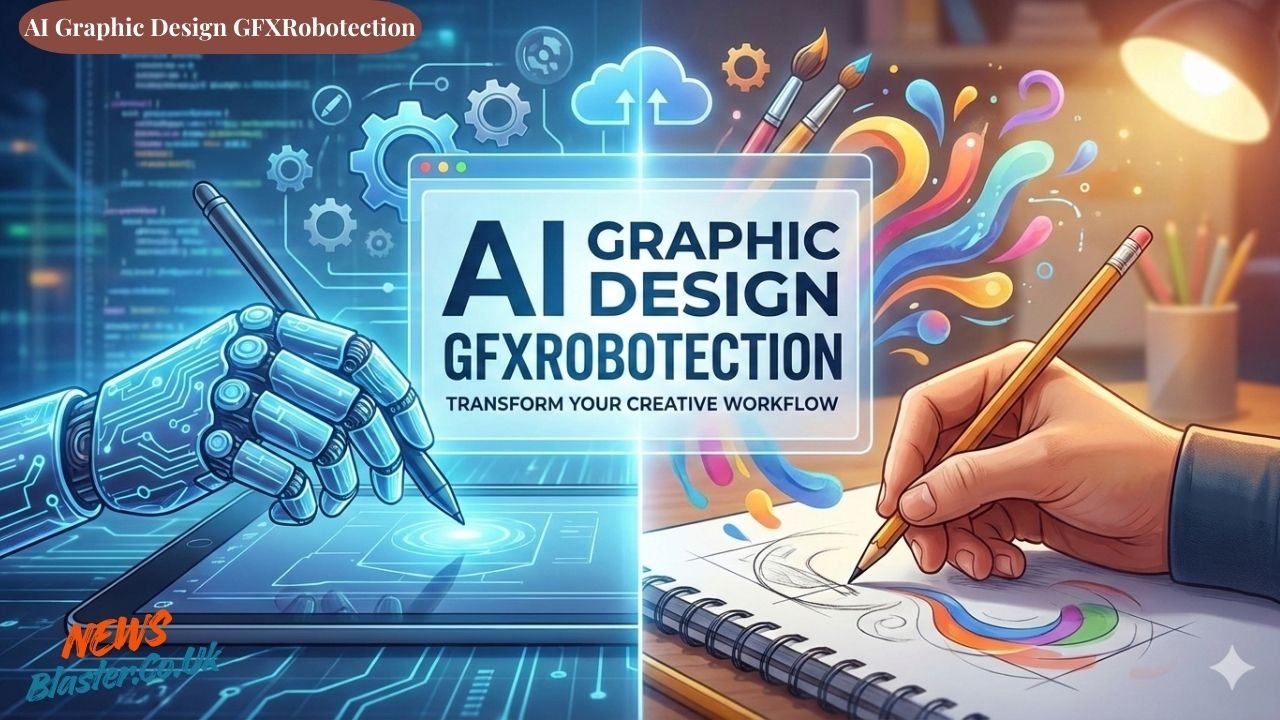
The world of digital design is evolving rapidly, and AI Graphic Design GFXRobotection is leading the way. This cutting-edge platform integrates artificial intelligence with creative workflows to help designers produce high-quality visuals more efficiently. By combining automation with smart suggestions, GFXRobotection enables creators to focus on concept development rather than repetitive tasks. Whether you are a professional designer or a business looking to enhance visual content, AI Graphic Design GFXRobotection offers a comprehensive solution. Its advanced technology ensures consistency, quality, and speed in every project.
Who is Behind AI Graphic Design GFXRobotection?
The development team behind this innovative platform comprises experienced engineers, designers, and artificial intelligence specialists who recognized the growing need for efficiency in creative industries. The creators aimed to bridge the gap between traditional design methods and modern technological capabilities. Their vision was to build a tool that doesn’t replace human creativity but amplifies it through intelligent assistance. The team continues to refine the platform based on user feedback and emerging trends in both design and machine learning.
Understanding AI Graphic Design GFXRobotection
At its core, this platform represents a fusion of creative intuition and computational power. The system learns from millions of design examples to understand composition principles, color theory, typography standards, and visual hierarchy. Unlike conventional tools that simply execute commands, this technology anticipates the designer needs and offers contextual recommendations. It analyzes project requirements and suggests optimal approaches while maintaining flexibility for personal artistic expression. The underlying algorithms continuously improve through usage patterns, making the system smarter over time.
Core Features of AI Graphic Design GFXRobotection
Smart Automation and Workflow Efficiency
The automation capabilities transform how designers approach routine tasks. Background removal, object isolation, and batch processing happen in seconds rather than hours. The system identifies repetitive elements across projects and offers to automate them, freeing creative professionals to concentrate on strategic decisions. Workflow templates adapt to individual working styles, creating personalized efficiency pathways that reduce production time significantly.
AI-Enhanced Image Quality
Image enhancement goes beyond simple filters. The technology analyzes visual content at a granular level, identifying areas that need improvement in lighting, sharpness, or color balance. It applies sophisticated adjustments that maintain natural appearance while elevating overall quality. Resolution upscaling preserves detail integrity, making low-quality assets usable for professional applications. These enhancements happen automatically or can be fine-tuned through intuitive controls.
Adaptive Templates and Creative Assistance
Templates in this system are not static starting points but dynamic frameworks that respond to content. When a designer begins a project, the platform suggests layouts based on the type of content, target audience, and industry standards. These suggestions serve as springboards rather than constraints, offering structure while encouraging experimentation. The creative assistance feature provides real-time feedback on design choices, helping users refine their work through intelligent critique.
Advanced Applications of AI Graphic Design GFXRobotection
The platform excels across multiple design disciplines. Marketing teams use it to generate campaign visuals that maintain brand consistency across channels. Social media managers create engaging content rapidly without sacrificing quality. Product designers prototype packaging concepts with realistic mockups. Presentation creators develop compelling slide decks that communicate ideas effectively. Educational institutions leverage the tool to teach design principles while demonstrating professional workflows. Each application benefits from the system’s ability to understand context and deliver appropriate solutions.
Benefits of Using AI Graphic Design GFXRobotection
Time savings represent the most immediate advantage. Projects that once required days of work now reach completion in hours. Consistency across brand materials becomes effortless as the system maintains style guidelines automatically. Cost efficiency emerges from reduced production hours and minimized need for extensive revisions. Quality remains high even when working under tight deadlines. The learning curve for new team members shortens significantly as the platform guides the creative process. Collaboration improves through shared templates and standardized workflows that keep everyone aligned.
How AI Graphic Design GFXRobotection Improves Workflow
Integration with existing tools ensures smooth adoption without disrupting established processes. The platform connects with popular software through plugins and extensions, creating a unified ecosystem. Version control becomes automatic, allowing designers to experiment freely while preserving earlier iterations. Asset management features organize files intelligently, making resources easy to locate and reuse. Team collaboration happens seamlessly through cloud-based sharing and real-time editing capabilities. Feedback loops tighten as stakeholders review and comment directly within the platform.
Future of AI Graphic Design GFXRobotection
Upcoming developments promise even greater capabilities. Voice-controlled design commands will allow hands-free creative direction. Augmented reality previews will show how designs appear in real-world contexts before finalization. Deeper learning algorithms will understand brand personality more nuanced, generating concepts that align with company values automatically. Cross-platform optimization will ensure designs look perfect on any device or medium. Predictive analytics will forecast design trends, helping businesses stay ahead of visual communication evolution.
AI Graphic Design GFXRobotection for Businesses
Companies of all sizes find value in this technology. Small businesses gain access to professional-grade design capabilities without hiring full creative departments. Medium enterprises scale their visual content production to match growing marketing demands. Large corporations maintain brand consistency across global operations through centralized design systems. The platform adapts to various budget levels, offering solutions that fit different organizational needs. Return on investment becomes measurable through increased content output and improved audience engagement metrics.
AI Graphic Design GFXRobotection for Creatives
Professional designers discover that the platform enhances rather than threatens their role. Routine tasks disappear, allowing more time for conceptual thinking and artistic exploration. Freelancers increase their project capacity without compromising quality standards. Design students learn industry-standard practices while building portfolios efficiently. The technology serves as a creative partner, offering suggestions that spark new ideas rather than limiting expression. Artists find freedom in automation, using saved time to push creative boundaries further.
Tips to Maximize AI Graphic Design GFXRobotection
Start with template exploration to understand the platform’s capabilities fully. Customize automation settings to match personal workflow preferences rather than accepting defaults. Invest time in organizing asset libraries for faster retrieval during projects. Experiment with different feature combinations to discover unexpected creative possibilities. Keep software updated to access the latest improvements and feature additions. Join user communities to learn from others’ experiences and share successful techniques. Set up keyboard shortcuts for frequently used functions to accelerate production further.
Common Mistakes to Avoid
Over-reliance on automation can lead to generic outputs that lack personality. Ignoring the learning resources means missing advanced features that could improve results dramatically. Failing to customize brand guidelines within the system results in inconsistent visual identity. Skipping quality checks before finalizing projects can let errors slip through despite AI assistance. Neglecting backup protocols risks losing work if technical issues arise. Treating the platform as a complete replacement for design knowledge rather than a powerful tool that amplifies existing skills limits creative potential.
Security and Privacy in AI Graphic Design GFXRobotection
Data protection measures ensure client confidentiality and intellectual property security. Encryption protocols safeguard files during transfer and storage. User authentication prevents unauthorized access to sensitive projects. Compliance with international privacy regulations protects both creators and their clients. Regular security audits identify and address potential vulnerabilities before they become problems. Clear data usage policies explain how the system learns from projects without compromising proprietary information. Offline working modes provide options for handling highly confidential materials.
Cost-Effectiveness of AI Graphic Design GFXRobotection
Pricing structures accommodate different usage patterns and organizational sizes. Subscription models spread costs predictably across budgeting periods. Pay-per-project options suit occasional users who need professional tools without ongoing commitments. Enterprise packages deliver volume discounts for large teams. When compared to hiring additional staff or outsourcing design work, the platform often proves significantly more economical. Hidden costs remain minimal as updates and support are included rather than as separate expenses. Free trial periods allow thorough evaluation before financial commitment.
Learning Curve and Accessibility
The interface design prioritizes intuitive navigation, making powerful features accessible to users at various skill levels. Interactive tutorials guide newcomers through basic functions step-by-step. Video demonstrations show real-world applications of advanced capabilities. Built-in help systems provide contextual assistance exactly when needed. Community forums offer peer support for troubleshooting and technique sharing. The platform adapts its complexity to user proficiency, revealing advanced options gradually as skills develop. Accessibility features ensure that designers with different abilities can use the system effectively.
Industry Impact of AI Graphic Design GFXRobotection
The broader design industry experiences transformation as this technology gains adoption. Quality standards rise as even small operations produce professional-grade visuals. Competition shifts from technical execution to creative strategy and conceptual innovation. Educational curricula evolve to emphasize AI collaboration skills alongside traditional design principles. Employment patterns change with increased demand for designers who understand both creativity and technology. Client expectations adjust as faster turnaround times and higher output volumes become the norm. The democratization of design tools empowers more people to participate in visual communication creation.
FAQs
What makes this platform different from traditional graphic design software gfxrobotection tools?
The integration of artificial intelligence creates a collaborative environment where the software actively assists rather than passively executing commands. Traditional tools require designers to make every decision and perform every action manually, while this system anticipates needs and automates repetitive processes.
Can beginners achieve professional results using this technology?
Yes, the guidance features and intelligent suggestions help less experienced users avoid common mistakes and learn design principles through practice. However, understanding fundamental design concepts still enhances outcomes significantly.
Does using automation reduce creative control?
Not at all. Designers maintain complete authority over final decisions while benefiting from suggestions and automated efficiency. The technology serves creative vision rather than dictating it.
How does graphic design with ai gfxtek handle unique brand requirements?
Customization options allow users to input specific brand guidelines, color palettes, typography preferences, and style rules. The system then generates suggestions that align with these parameters while still offering creative variations.
Is internet connectivity required for all features?
Many core functions operate offline, though some advanced AI capabilities and cloud collaboration features require internet access. Users can choose working modes based on their connectivity situation and security needs.
What file formats does the platform support?
Standard industry formats, including vector graphics, raster images, and editable documents, are fully compatible. Import and export functions handle conversions smoothly between different format types.
Final Thoughts
The emergence of AI Graphic Design GFXRobotection marks a significant milestone in creative technology evolution. By combining human imagination with computational efficiency, this platform addresses longstanding challenges in the design industry. Time constraints, consistency requirements, and technical limitations no longer restrict creative output. Professionals gain a powerful ally that handles mundane tasks while preserving the irreplaceable value of human creativity and strategic thinking. As the technology continues advancing, the partnership between designers and artificial intelligence will only grow stronger, opening new possibilities for visual communication. Whether working independently or as part of a team, embracing these tools positions creators for success in an increasingly digital landscape.
Also Read: Stewart from WaveTechGlobal: The Visionary Reshaping Tech Innovation